HOME
 Professor Patrick Mendis is a Sri Lankan-born American scholar, diplomat, author, educator, public servant, and philanthropist. His award-winning career spans government service under six American presidents in both Democratic and Republican administrations—most recently as a presidential advisor—and academic appointments across North America, Europe, and Asia. His work connects education, science, diplomacy, commerce, and cultural understanding in the pursuit of world peace.
In 1976, as a student in Sri Lanka, Mendis received a UNESCO Award for debating the significance of a Buddhist teaching: the mind is the forerunner of our actions. Quoting the first verse of the Dhammapada, he argued that understanding of the nature of the mind is essential to building a peaceful world.
That experience inspired an enduring question: How can education change the way people think about conflict? This inquiry echoed the conviction expressed in the preamble to UNESCO’s Constitution that peace must be built in human minds.
This insight has guided his academic and diplomatic career in American foreign policy, international security, Sino-American relations, and enhancing Sri Lanka’s role in global affairs.
From Polonnaruwa to Minnesota
Born in Polonnaruwa—the ancient royal capital and a UNESCO World Heritage Site—Mendis grew up amid Buddhist and Catholic traditions. On his family’s three-acre rice field, where water buffaloes worked the land, he met American Peace Corps and agricultural volunteers. These encounters sparked his curiosity about the United States and the wider world. The Financial Times later described his remarkable journey from Sri Lanka to America as one from “mud house to White House.”
In 1978, an American Field Service (AFS) scholarship took him to Perham High School in Minnesota for an academic year. His host parents, Bill and Dorothy Johnson, and the wider community introduced him to American hospitality, civic responsibility, and the value of education.
When Sri Lanka’s civil war began in 1983, Mendis was completing his undergraduate studies at the University of Sri Jayewardenepura. Concerned for his future, the Perham community raised funds to help him return to the United States for graduate education. He has since called Perham his American “birthplace.”
American Diplomacy and Government Service
In 1985, while pursuing graduate studies at the University of Minnesota, Mendis served as Sri Lanka’s first Youth Ambassador to the United Nations during International Youth Year. In recognition of his leadership, the UN Secretariat presented him with the United Nations Medal for the International Year of Youth. This experience deepened his commitment to education, diplomacy, and peace. He subsequently combined university teaching with U.S. government service across Republican and Democratic administrations.
His government career began under President Ronald Reagan. He worked first with the U.S. Senate Foreign Relations Committee and later with the Departments of State, Energy, Defense, and Agriculture.
During the Bill Clinton administration, Mendis served as the chairman of the interagency policymaking group on international science and technology agreements at the State Department. With White House approval, he served as the principal author of the Supplementary Handbook on the C-175 Process, designed to streamline government-wide clearance of international science and technology agreements. He also helped establish the U.S. Embassy Science Fellows Program and advised American delegations to the United Nations. For his contributions, he received the Secretary’s Meritorious Honor Award.
As a military professor, Mendis taught overseas at major NATO bases in Europe and U.S. military installations in Japan and South Korea. He also taught military and civilian government personnel in the United States. For teaching excellence overseas, he received the Stanley J. Drazek Teaching Excellence Award from the University of Maryland.
Under President George W. Bush, Mendis served as secretariat director in the State Department’s Bureau of Educational and Cultural Affairs (ECA), successor to the U.S. Information Agency (USIA). He oversaw the Fulbright, Humphrey, and other international exchange programs. At the direction of Secretary of State Colin Powell, Mendis helped initiate U.S.–Italy scientific cooperation to facilitate exchanges of scientists and researchers between the two countries. In recognition of his ECA leadership, he received the Benjamin Franklin Award.
The Bush White House also appointed Mendis to serve on the U.S. Department of Agriculture’s Graduate School Board while he was teaching economics at the USDA Graduate School. He later received the USDA Outstanding Leadership and Service Award.
President Barack Obama appointed Mendis as a commissioner to the U.S. National Commission for UNESCO, where he served two terms under Secretaries of State Hillary Clinton and John Kerry, contributing to UNESCO policy discussions and advising policymakers. Working with congressional leaders and staff, he advocated increased funding for UNESCO and other federal programs supporting international educational, scientific, and cultural exchanges.
With congressional support, the Biden White House later appointed him as a presidential advisor on national security education at the U.S. Department of Defense. The Trump White House terminated his appointment in July 2026.
Throughout his government service and his work at the United Nations and the World Bank, he continued teaching, conducting research, and delivering lectures internationally. His contributions to global education and diplomacy were recognized with the Albert Nelson Marquis Lifetime Achievement Award from Who’s Who in America.
Mentors Across Two Countries
Mentors on both sides of the ocean shaped his worldview and career path. In Minnesota, the Honorable Edward Burdick encouraged a life of bipartisan public service. Burdick often said that the American eagle needs both wings to soar. This image shaped Mendis’ understanding of the essence of public service. Burdick also helped guide his career from the Minnesota House of Representatives in St. Paul to the U.S. Senate Foreign Relations Committee in Washington, D.C.
Professor Harlan Cleveland—a former U.S. ambassador to NATO and founding dean of the University of Minnesota’s Hubert H. Humphrey School of Public Affairs—encouraged Mendis to cross professional, institutional, and disciplinary boundaries. Cleveland’s insight that “everything is related to everything else” inspired Mendis to adopt what Cleveland called a “generalist mindset” for understanding and addressing complex global challenges.
Former U.S. Vice President Walter Mondale offered another model of principled leadership and shared responsibility. Both Mondale and Mendis received Hubert H. Humphrey Outstanding Leadership Awards at the University of Minnesota in 1986. Mendis later paid tribute to Burdick, Cleveland, and Mondale in personal reflections on their influence.
In Sri Lanka, Sir Arthur C. Clarke broadened his interest in science, technology, and humanity’s future. Dr. A. T. Ariyaratne—founder of the Sarvodaya Movement—demonstrated how compassion and self-awakening could inspire community action. Ambassador Jayantha Dhanapala—a distinguished UN diplomat and former Sri Lankan ambassador to the United States—embodied the lasting importance of multilateral diplomacy and disarmament. Their fields differed, but their shared lesson endured: ideas matter most when put to work for others.
Connecting Sri Lanka with the U.S., UN, and the World
Mentors on both sides of the ocean shaped Mendis’ worldview and career path. In Minnesota, the Honorable Edward Burdick encouraged a life of bipartisan public service. Burdick often said that the American eagle needs both wings to soar. This image shaped Mendis’ understanding of the essence of public service. Burdick also helped guide his career from the Minnesota House of Representatives in St. Paul to the U.S. Senate Foreign Relations Committee in Washington, D.C.
Professor Harlan Cleveland—a former U.S. ambassador to NATO and founding dean of the University of Minnesota’s Hubert H. Humphrey School of Public Affairs—encouraged Mendis to cross professional, institutional, and disciplinary boundaries. Cleveland’s insight that “everything is related to everything else” inspired Mendis to adopt what Cleveland called a “generalist mindset” for understanding and addressing complex global challenges.
Former U.S. Vice President Walter Mondale offered another model of principled leadership and shared responsibility. Both Mondale and Mendis received Hubert H. Humphrey Outstanding Leadership Awards at the University of Minnesota in 1986. Mendis later paid tribute to Burdick, Cleveland, and Mondale in personal reflections on their influence.
In Sri Lanka, Sir Arthur C. Clarke broadened his interest in science, technology, and humanity’s future. Dr. A. T. Ariyaratne, founder of the Sarvodaya Movement, demonstrated how compassion and self-awakening could inspire community action. Ambassador Jayantha Dhanapala, a distinguished UN diplomat and former Sri Lankan ambassador to the United States, embodied the lasting importance of multilateral diplomacy and disarmament. Their fields differed, but their shared lesson endured: ideas matter most when put to work for others.
Interreligious Dialogue and Cultural Diplomacy
Mendis’ Buddhist–Catholic upbringing in Polonnaruwa and Minnesota also nurtured his commitment to interreligious understanding. He has engaged with Buddhist scholars and Catholic counterparts in dialogues connected to the Vatican’s Pontifical Council for Interreligious Dialogue. As a student of history, Mendis believes cultural and religious understanding can complement formal diplomacy.
This commitment to cross-cultural understanding shaped his engagement with Japan, China, and South Korea as well as his lifelong study of Buddhism, Confucianism, and Daoism. In China, he traveled across all provinces and taught at more than 25 universities and academies, including the Chinese Academy of Social Sciences. These experiences deepened his appreciation of Asian history, culture, and philosophy.
In 2018, he received the International Confucius Award in Qufu, the birthplace of Confucius. Presented by the Confucius Research Institute of China—established with the approval of China’s State Council—the award recognized his contributions to Chinese cultural understanding and the promotion of Sino-American relations.
While teaching in China, Mendis introduced the concept of “Buddhist diplomacy” to describe the historical Buddhist connections between China and Sri Lanka. Although bilateral commercial and diplomatic exchanges had existed for centuries, Buddhist ties gained greater prominence with the fifth-century Chinese monk Faxian’s visit to Sri Lanka. The venerable monk studied Buddhist teachings for two years at the Abhayagiri Monastery in Anuradhapura, the ancient capital.
The Most Venerable Professor Kallanchiye Rathanasiri of the Abhayagiri Royal Temple shared this interest in Buddhist history and Sino-Lankan relations. He described Mendis as a “quintessential son of our motherland.” The venerable professor earned his doctorate at Wuhan University in China, where Mendis also taught commercial diplomacy.
Mendis’ contributions to Sri Lanka were also recognized with a Lifetime Achievement Award from the Sri Lanka Foundation in Los Angeles, California.
Scholarship and Philanthropy: Opportunity Received and Shared
Mendis has sought to share the opportunities others gave him. In Sri Lanka, he established the Dr. Patrick Mendis Prize in Management and Leadership at the University of Sri Jayewardenepura in 1994. As founding chairman of the advisory board of the Educate Lanka Foundation, he has supported scholarships for Sri Lankan students affected by the 2004 tsunami. He also created the Sarvodaya Peace Prize to honor peace-building projects initiated by Dr. Ariyaratne. In 2026, Mendis endowed the Professor Patrick Mendis Gold Medal and Prize at Rajarata University of Sri Lanka to recognize excellence in management education and leadership.
In the United States, he endowed the Johnson–Mendis Scholarship for Perham High School students through Minnesota State Community and Technical College (M State) in Fergus Falls. The scholarship honors his late AFS host parents. In tribute to his American “father” at the Minnesota House of Representatives, he established the Edward Burdick Legislative Award at the University of Minnesota. He also instituted the Millennials Award for Leadership and Service at Harvard University to support students of journalism and international relations. Together, these initiatives turn gratitude into opportunity for others.
Mendis has held academic and research appointments at leading institutions in the United States and abroad. At Harvard University, he served as a non-resident associate-in-research at the Fairbank Center for Chinese Studies and a Rajawali senior fellow at the Ash Center for Democratic Governance and Innovation at the Harvard Kennedy School. A fellow of the World Academy of Art and Science, he was also a distinguished senior fellow and affiliate professor of public and international affairs at George Mason University and a visiting foreign policy scholar at the Johns Hopkins University School of Advanced International Studies (SAIS).
His international research fellowships and advisory positions have spanned several continents. In Asia, he served as a distinguished senior fellow at the Synergia Foundation in Bangalore, India; a senior fellow at the Taiwan Center for Security Studies in Taipei; a senior fellow and academic advisor at the Pangoal Institution in Beijing; and a distinguished visiting scholar at the National Confucius Research Institute in Qufu, China. His other appointments included an honorary research fellowship at the University of the West Indies in Kingston, Jamaica; a Socrates Society fellowship at the Aspen Institute; a science and diplomacy fellowship at the American Association for the Advancement of Science; a Coolidge research fellowship at Columbia University; a Sasakawa fellowship in Japan; and a Twenty-First Century Trust fellowship at Oxford University.
Today, Mendis serves as a distinguished visiting professor and honorary fellow at the University of Sri Jayewardenepura and as a distinguished visiting professor of transatlantic relations at the University of Warsaw. His academic journey has also taken him to universities such as Harvard, Yale, Columbia, Johns Hopkins, George Mason, Oxford, Peking, Fudan, and Tsinghua. He divides his time between Washington, D.C., and Kraków, Poland. His wife, Dr. Antonina Łuszczykiewicz-Mendis, is an assistant professor at Jagiellonian University in Kraków.
From Polonnaruwa to Minnesota, Washington, Asia, and Europe, his uncharted journey has followed one conviction: lasting peace requires more than treaties among governments. It depends on what people learn, how they think, and whether they can understand one another.
Fifty years after receiving his first UNESCO award in 1976, Mendis continues to draw on Buddhist wisdom and the Catholic teaching of loving one’s neighbor—near and far—in his scholarship, education, philanthropy, and international service. He strives to live by a simple but profound truth: Peace begins in the mind.
* * *
Book Interviews
TRADE for PEACE by Prof. Robert Kudrle, University of Minnesota
PEACEFUL WAR by Frank Neville, Chief of Staff, George Mason University
GLOCALIZATION by Prof. Shelton Williams, Johns Hopkins University
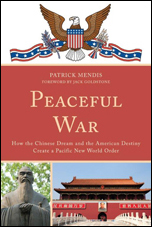 Peaceful War
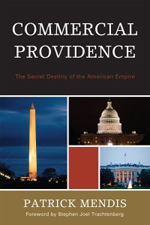 Commercial Providence
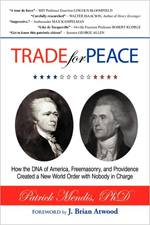 Trade for Peace
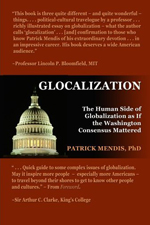 Glocalization